SQ IAC MENU: Provenance / Love Thy Sovereign Nation Neighbor / Allyship / Call To Action
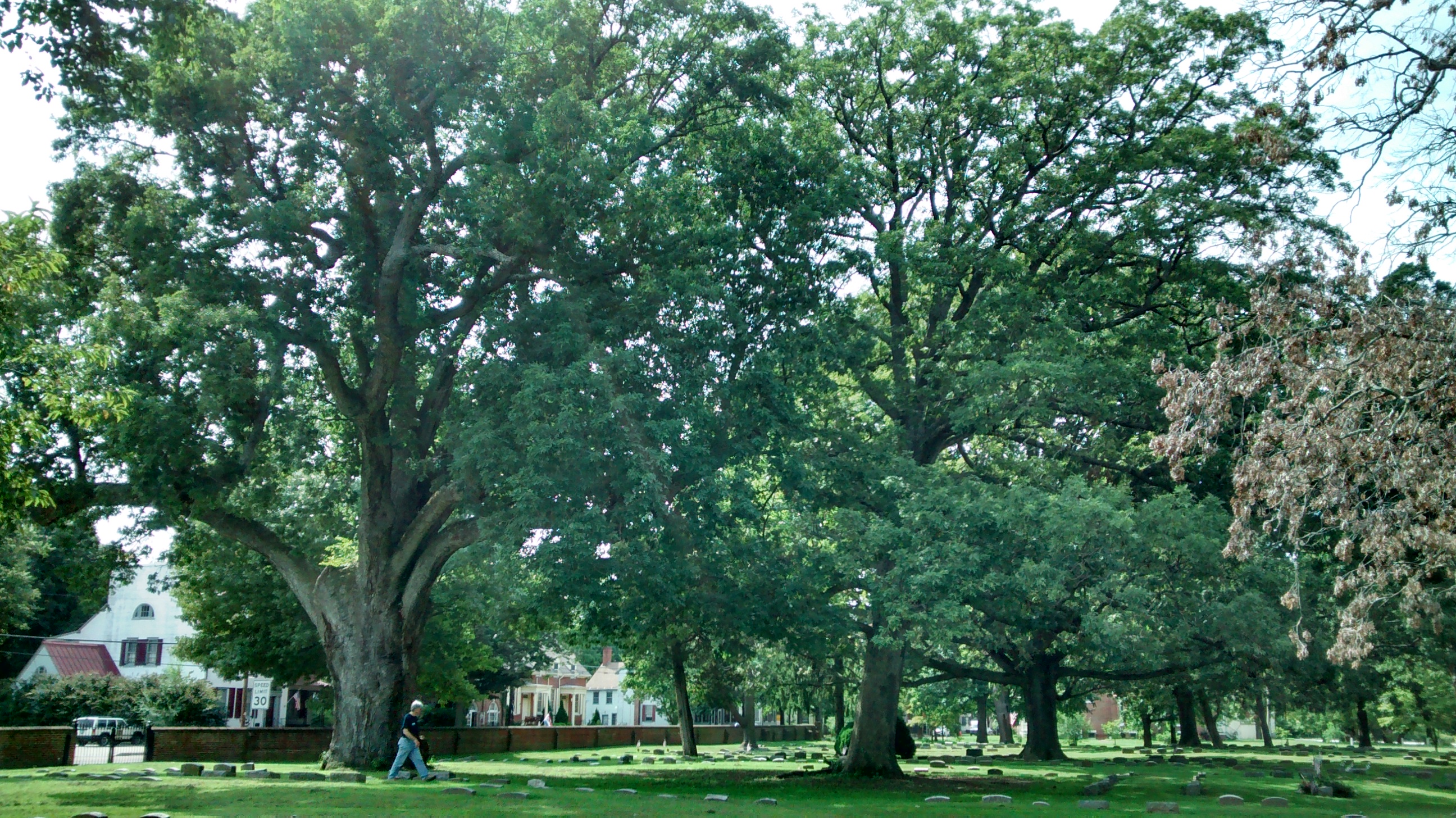
Lenape Sacred Oak, known as The Salem Oak, Salem Friends Burial Ground, Salem, NJ, ©sbM, ALL RIGHTS RESERVED
Seek Peace and Pursue It. Psalm 34:14
Fenwick’s Colony
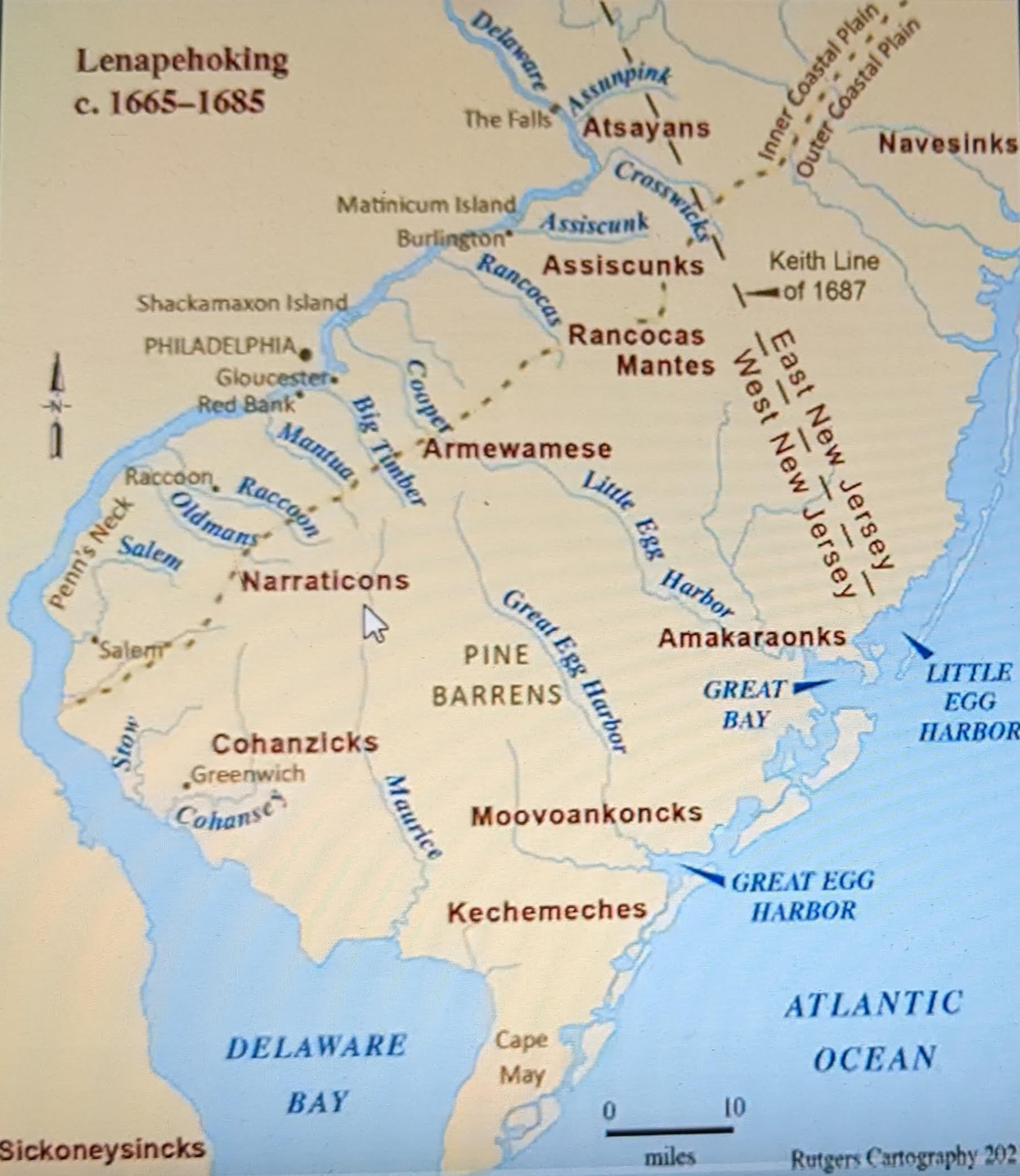
Having departed England in the summer of 1675, John Fenwick and the passengers aboard The Griffin arrived in Scheyichbi, Lenapehoking, on September 13, 1675. Welcomed by the Lenape Indians of Scheyichbi, the newcomers gathered beneath the branches of a mature Sacred Oak Tree—estimated to be around 255 years old at the time—which would witness the foundational moments of what is contemporarily known as Salem and Cumberland Counties.
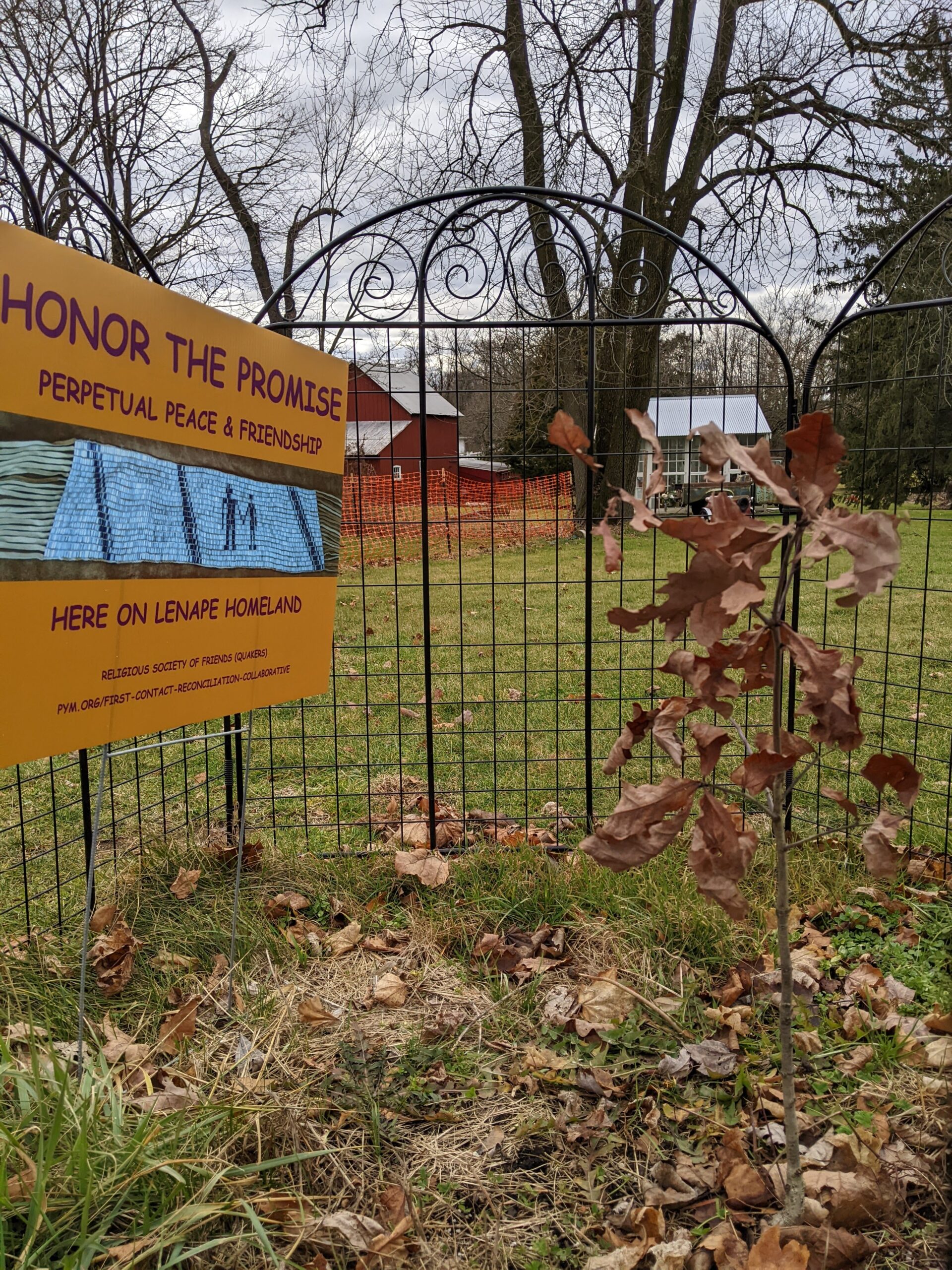
Fenwick sought land to establish a colony for the Religious Society of Friends (Quakers). However, a profound cultural misunderstanding underpinned their interactions: while Fenwick sought permanent land ownership through written deeds, the Lenape understood the agreements as granting shared land use, with the understanding that they could continue to inhabit the territory until they saw fit to move.
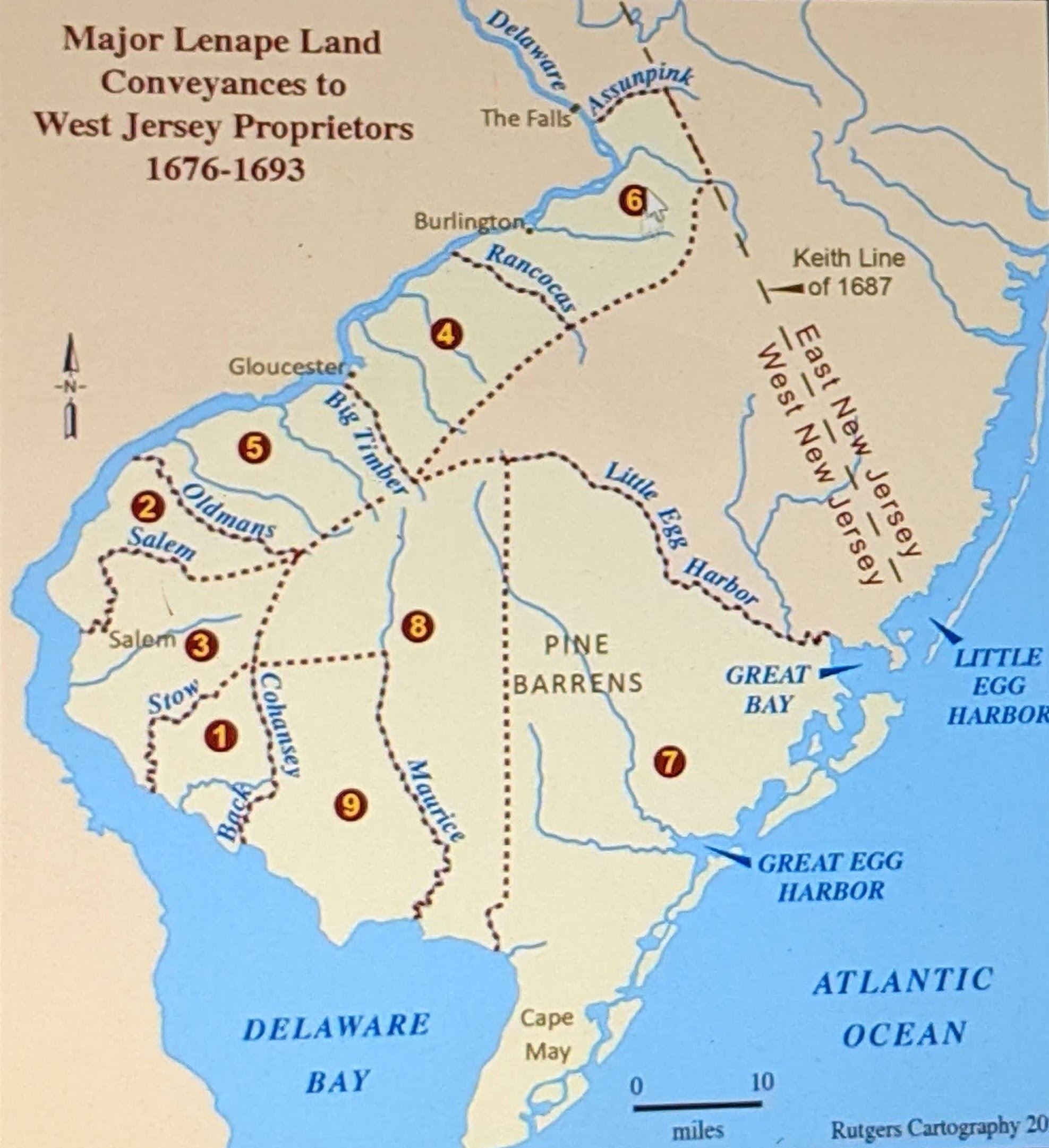
Between November 17, 1675, and March 1676, Fenwick negotiated extensively with the Lenape, aided by interpreter and justice Foppe Outhout. Over these six months, Fenwick secured three formal documents in which the Lenape Sakima agreed to the joint use of territory and resources, refusing to sell the land outright.
The agreed-upon territory stretched along the Delaware River, spanning from
- Mosacksa (Oldmans) Creek
- Game / Forcus / Fenwick (Salem) Creek
- Canahockincke / Little Cohanzick (Stowe) Creek
- Great Cohanzick (Cohansey River)
Guided by intentions of “perpetual peace and friendship,” oral history remembers the pact with the vow: as long as the sun shines and the rivers run, we shall bind our hearts to yours. As proprietor of one-tenth of the territory known to European colonists as West Jersey, Fenwick subsequently surveyed and deeded parcels of this shared land to fellow immigrants.
Lenape Sacred Oak Treaty Tree
Based on the age of the Sacred Oak Tree when she fell and oral history, this Lenape Treaty tree may have sprouted around 1420 A.D., reaching about 255 years of age during the Lenape-Fenwick treaty negotiations. By the time she fell—on a quiet evening at 6:00 PM on June 6, 2019—she was estimated to be 600 years old. Her natural daughters, daughter’s daughters, and propagated descendants continue this living story, literally and figuratively rooted throughout the Scheyichbi region of Lenapehoking and beyond. Her story is their story, too.
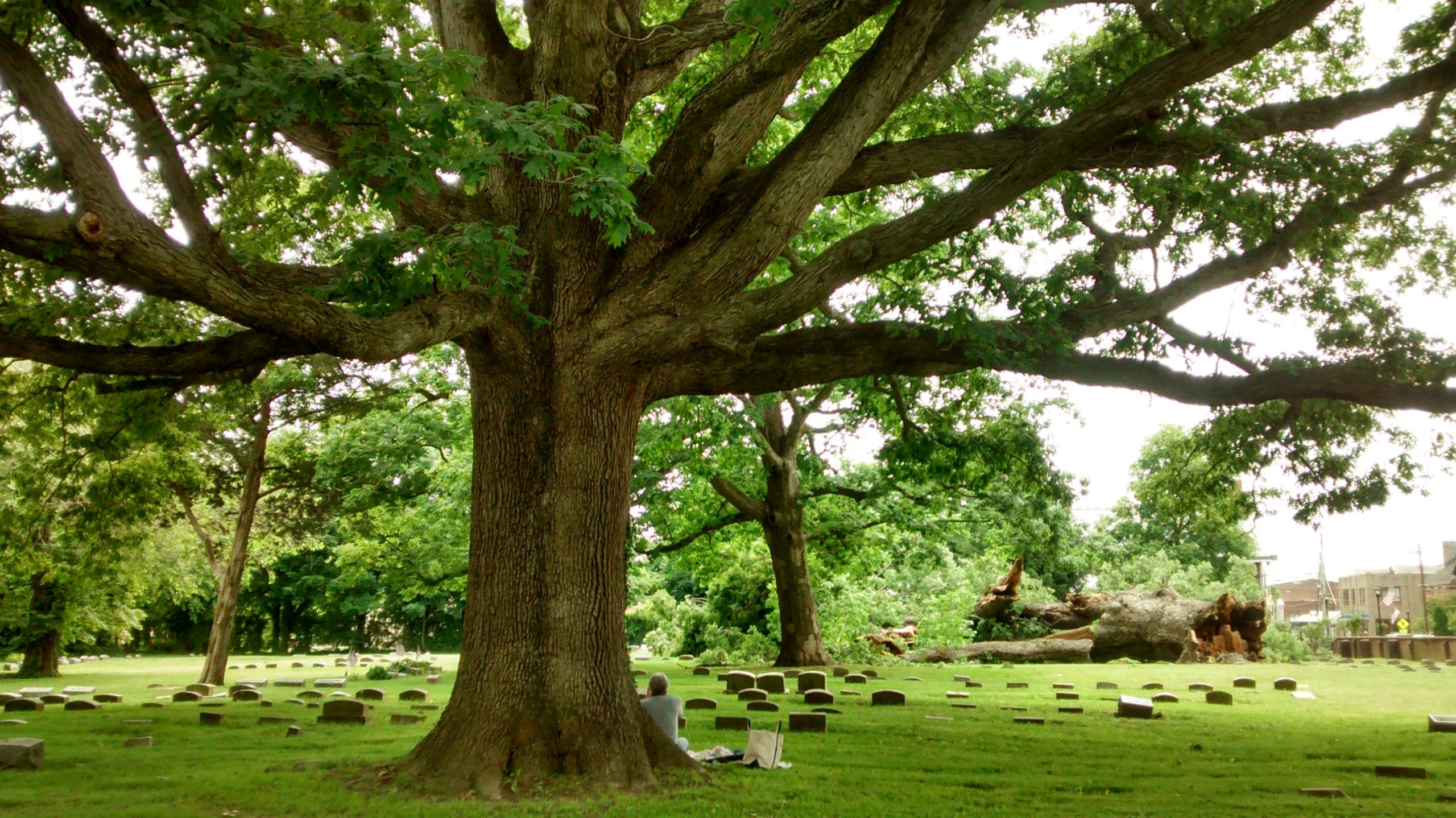
Daughter Oak & felled Sacred Oak, 2019, Salem Friends Burial Ground, Salem, NJ ©sbM, ALL RIGHTS RESERVED
 Fall Foliage Lovers Enjoy NJ’s Largest Oak In Salem County
Famous ancient New Jersey oak tree collapses
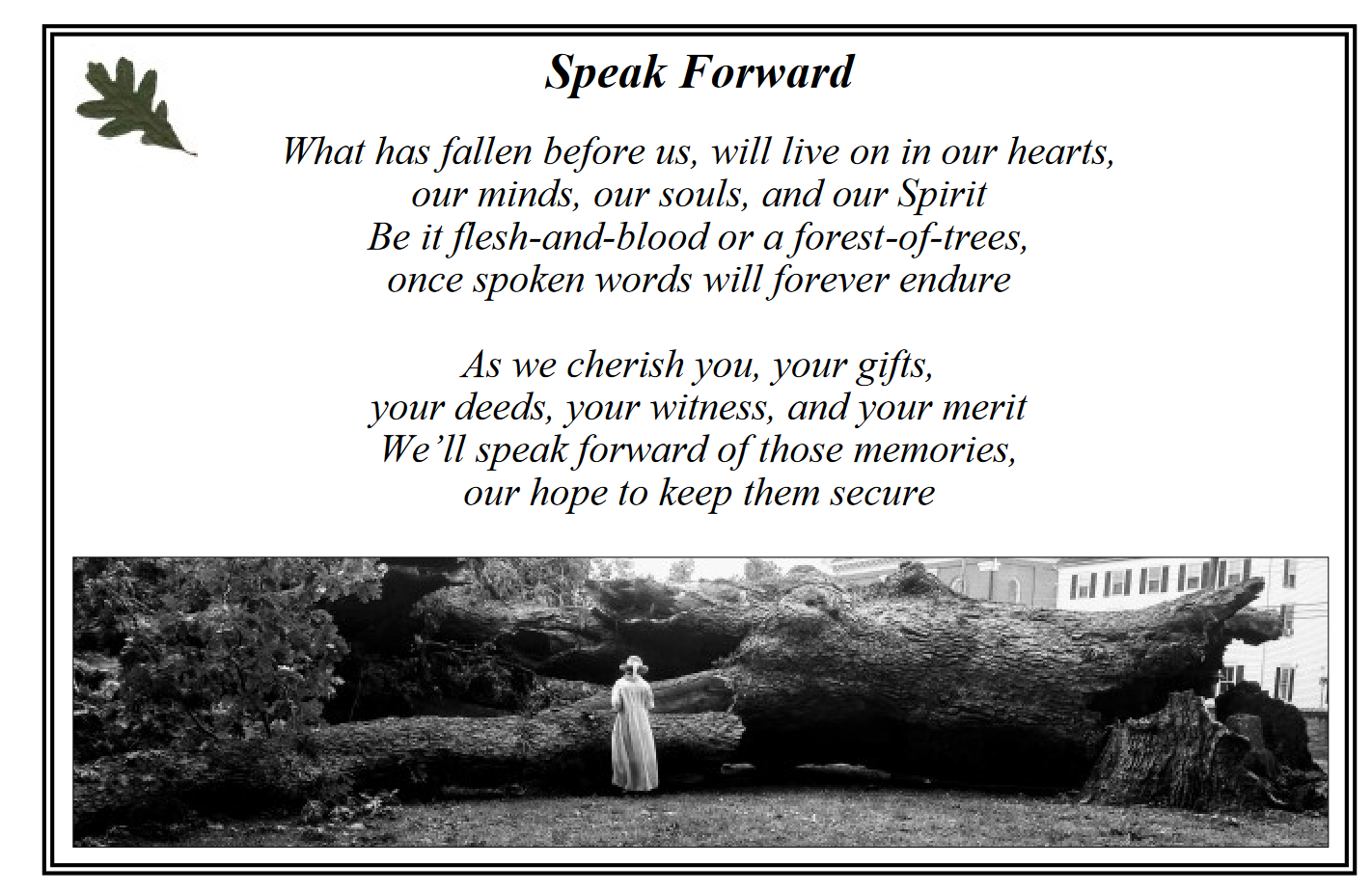
Originally posted in Salem Quarter News, Summer 2019, Speak Forward (poem) and Day After (photo) © Jim Murphy; and The Mighty Salem Oak story.
The Mighty Salem Oak 1419-2019, originally posted in Salem Quarter News Summer 2019, pages 14 & 15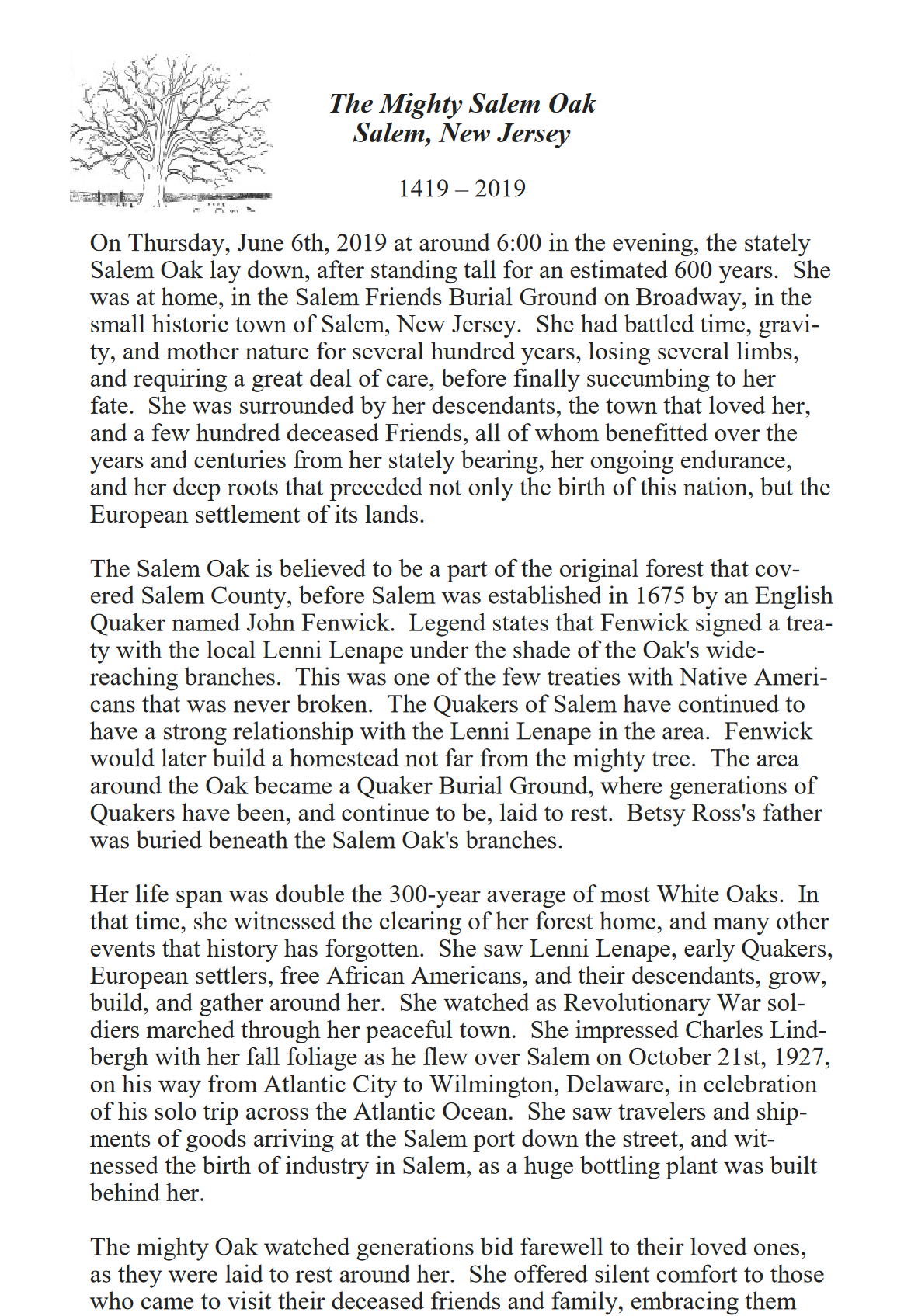
Our SQ IAC Story
After hundreds of years on this land, contemporary Salem Quarter Friends have built decades of attendance at sovereign Native Nations’ public powwows on their Lenape ancestral homeland. Friends of Salem Quarter regularly accept invitations by the Nanticoke Lenni-Lenape Tribal Nation to gatherings at their Cohanzick Tribal Grounds. Through seasoned discernment, in the spring of 2011, Salem Quarter approved the establishment of an Indian Affairs Committee to formalize and deepen ongoing acts of collaboration with this local sovereign Nation. The primary dual mission of the committee is to strengthen relationships as led, bringing forth our gifts while honoring sacred promises.
SQ Friends are cheerfully walking, listening, loving, and making joyful noise—celebrating together with Lenape who have maintained a continuous relationship with their homeland, Lenapehoking. Mutual acts of beneficial engagement between our communities include interfaith worship sessions, attending public powwows, accepting invitations to non-public social and ceremonial gatherings, examining early Friends’ history, and acknowledging predominant cultural biases. Guided by Friends’ testimonies and practices, we are continually led to ask:
How might the Light within guide Friends toward righting relationships with sovereign Nations?
In June 2011, the Salem Quarter Nominating Committee named the first slate of Indian Affairs Committee members, noting that terms were not initially established and that future members would be nominated directly by the committee itself, subject to approval by the Quarterly Meeting body—a process that remains in place today. The committee operates as an “open” body, holding “set” meetings prior to Quarterly business meetings, alongside “called” meetings as way opens.
We Are On Indigenous Land: We Are Treaty People
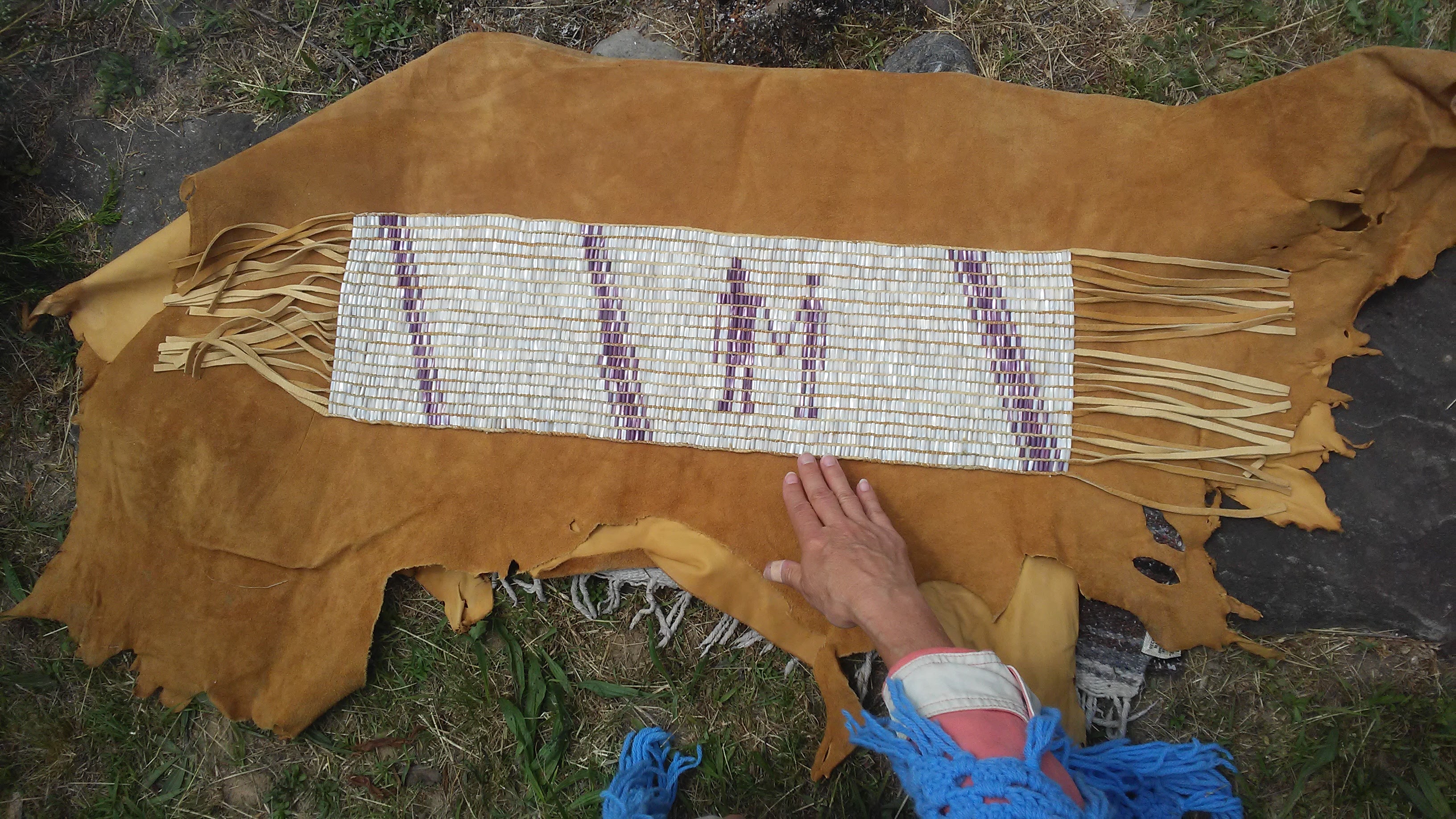
Treaty of Amity Wampum Belt crafted by Lone Bear Revey (Lenape) gifted to The Religious Society of Friends, Philadelphia Yearly Meeting (1995) © 2017 Jim Murphy ALL RIGHTS RESERVE
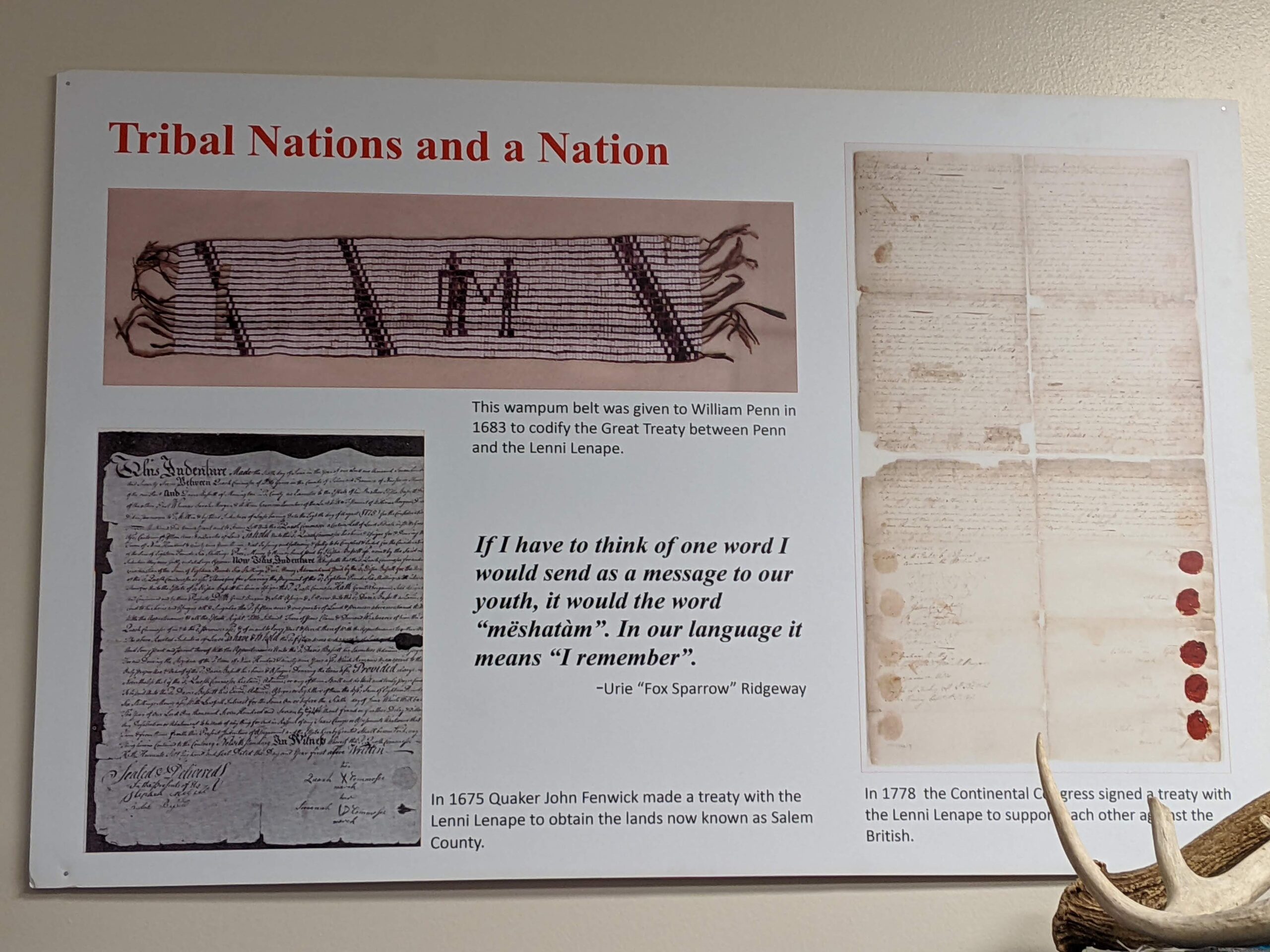
“Too often, when American Indian Culture is presented, it is as though it belongs only to the remote past…Too often, our people are spoken of as though we no longer exist in New Jersey and the surrounding states…Too often, others have spoken about us, but without regard to us… For too long, our voices have not been heard…” ~www.nativenewjersey.org
Lenape & Friends in Historic West Jersey
Jean R. Soderlund—historian, author, and Professor Emeritus of Lehigh University—spoke with Friends in March 2022. Jean’s talk, From Shackamaxon Island to Haddonfield: Quakers & Lenapes in Early New Jersey, highlighted her research on the Lenape living along the Cooper River and Timber Creek regions (including present-day Camden, NJ). For decades, these communities resisted full-scale colonization, remaining sovereign through peaceful conflict resolution while protecting personal and religious liberty and avoiding violence.
Though early Friends shared many of these peaceful values, sweeping epidemics and colonists’ relentless greed for land ultimately led to the decline of Armewamese towns—mirroring, in devastating ways, the patterns seen in more overtly militarized colonies such as Virginia, Massachusetts, and New Netherland.
IAC Reports are posted on Salem Quarter News
SQ IAC Contact information:
email: sbMurphy@UMES.edu
voice message: (609)732-0576
Provenance / Love Thy Sovereign Nation Neighbor / Allyship / Call To Action
Photographs used with permissions, artists ©, ALL RIGHTS RESERVED.